Retaining walls do more than add visual interest to your landscape—they solve real problems. Whether you’re dealing with erosion, creating usable space on a slope, or adding definition to your yard, choosing the right retaining wall material can make a significant difference in both appearance and longevity.
At Cloverleaf Lawn & Landscapes, we regularly help Southwest Michigan homeowners determine which retaining wall option best fits their property, budget, and long-term goals. Three of the most popular choices are boulder walls, timber walls, and natural stone walls. Each offers distinct advantages depending on your landscape and project needs.
Table of Contents
- Why Install a Retaining Wall?
- Boulder Retaining Walls
- Timber Retaining Walls
- Natural Stone Retaining Walls
- Comparing Boulder, Timber, and Natural Stone Walls
- Which Retaining Wall Is Right for Your Property?
- Trust Cloverleaf for Retaining Wall Installation in Southwest Michigan
- Frequently Asked Questions
Why Install a Retaining Wall?
Retaining walls are designed to hold back soil and stabilize sloped areas. They can help prevent erosion, manage drainage, create level outdoor living spaces, and improve the overall appearance of your landscape. Properly built retaining walls also increase the functionality and value of a property. A critical component of any retaining wall is proper drainage, which helps reduce water pressure behind the wall and extends its lifespan.
Many homeowners include retaining walls as part of larger hardscape design and installation projects, especially when they want to create more usable outdoor space or add structure to their yard.
Common reasons homeowners install retaining walls include:
- Managing steep slopes
- Preventing soil erosion
- Creating usable outdoor living areas
- Defining landscape beds
- Improving curb appeal
- Addressing drainage challenges
Boulder Retaining Walls
Boulder retaining walls are one of the most popular options throughout Southwest Michigan because they blend naturally with the surrounding landscape.
Large natural boulders are stacked and strategically placed to create a sturdy wall that can handle significant grade changes. Their rugged appearance works especially well for larger properties, lakefront homes, wooded lots, and landscapes with a natural aesthetic.
Boulder walls are often a great fit for homeowners who want a retaining wall that looks organic while still delivering the strength needed for slope stabilization. You can see examples of Cloverleaf’s outdoor projects in our landscaping and hardscaping project gallery.
Benefits of Boulder Walls
- Natural, rustic appearance
- Extremely durable
- Minimal maintenance requirements
- Excellent for larger elevation changes
- Blends seamlessly into natural landscapes
Properly installed boulder walls can last for decades and often require very little upkeep beyond occasional inspections. Their size and weight make them highly effective at controlling erosion and stabilizing slopes.
Potential Drawbacks
- Higher installation costs due to equipment requirements
- Less formal appearance than cut stone
- Large boulders may not suit every landscape style
Timber Retaining Walls
Timber retaining walls offer a classic look and are often the most budget-friendly option for homeowners.
Constructed from pressure-treated lumber, timber walls create a warm, natural appearance that complements gardens, wooded properties, and traditional landscapes. Because lumber is relatively affordable and easy to work with, timber walls are often selected for smaller projects.
Timber retaining walls can also work well alongside other hardscape features, such as steps, pathways, and outdoor living areas.
Benefits of Timber Walls
- Lower upfront cost
- Natural appearance
- Faster installation
- Ideal for smaller retaining projects
- Works well in rustic landscapes
Potential Drawbacks
The primary limitation of timber walls is lifespan. Even pressure-treated wood eventually breaks down due to moisture exposure, insects, and natural weathering. While timber walls can last many years, they generally require more maintenance and replacement sooner than stone options.
Timber retaining walls are often best suited for:
- Garden beds
- Small elevation changes
- Budget-conscious projects
- Landscapes where a rustic look is desired
Natural Stone Retaining Walls
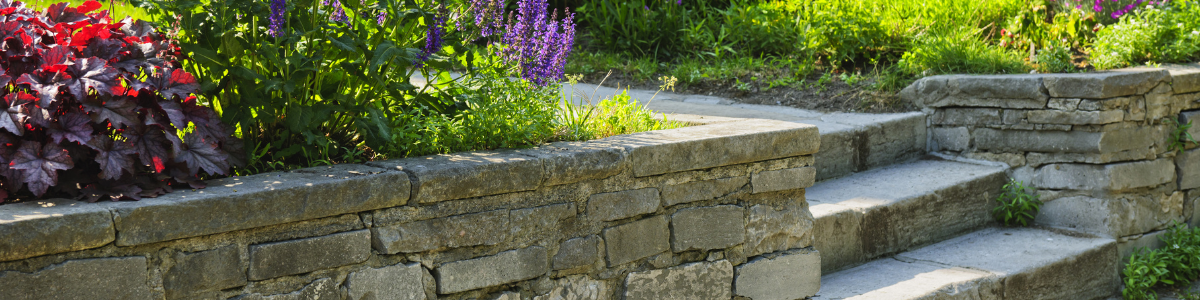
Natural stone retaining walls provide a timeless appearance that can elevate the look of nearly any landscape.
Unlike boulder walls, which feature larger and more irregular stones, natural stone walls are typically constructed using cut or carefully selected stone that creates a more refined appearance.
Natural stone walls pair beautifully with patios, walkways, stairways, and other custom hardscape features, making them a strong option for homeowners who want a cohesive outdoor living space.
Benefits of Natural Stone Walls
- Exceptional durability
- Timeless aesthetic appeal
- Complements both traditional and modern homes
- Low maintenance
- Can last for generations when properly installed
Natural stone has been used in retaining wall construction for centuries because of its strength and longevity. Many homeowners view natural stone as a long-term investment that adds significant value and beauty to their property.
Potential Drawbacks
- Highest upfront investment
- More labor-intensive installation
- May require specialized masonry expertise
Despite the higher cost, many homeowners choose natural stone because of its premium appearance and longevity. Stone retaining walls can often last 50 years or more when built with proper drainage and construction techniques.
Comparing Boulder, Timber, and Natural Stone Walls
| Feature | Boulder | Timber | Natural Stone |
|---|---|---|---|
| Appearance | Natural and rugged | Warm and rustic | Elegant and timeless |
| Durability | Excellent | Moderate | Excellent |
| Maintenance | Low | Moderate to High | Low |
| Lifespan | 50+ years | 20–40 years | 50+ years |
| Cost | Moderate to High | Lower | High |
| Best For | Large slopes and natural landscapes | Smaller projects and budgets | Premium landscaping and long-term value |
Which Retaining Wall Is Right for Your Property?
The best retaining wall depends on your property’s unique conditions and your goals.
A boulder wall may be the best choice if:
- You have a larger slope to manage.
- You prefer a natural landscape aesthetic.
- You want a highly durable solution.
A timber wall may be ideal if:
- You’re working within a tighter budget.
- The wall is relatively small.
- You prefer a rustic appearance.
A natural stone wall may be right for you if:
- You want a premium look.
- Long-term durability is a priority.
- You are investing in overall property value and curb appeal.
No matter which material you choose, proper drainage, site preparation, and installation are critical to long-term performance. Water pressure behind a retaining wall is one of the most common causes of failure, making professional installation especially important.
If your retaining wall is part of a larger yard transformation, you may also want to consider how it connects with your lawn, planting beds, patios, and walkways. For homeowners planning lawn updates at the same time, our guide to sod installation vs. seeding in Southwest Michigan can help with the next step of your project.
Trust Cloverleaf for Retaining Wall Installation in Southwest Michigan
Whether you’re looking to prevent erosion, create more usable outdoor space, or enhance your property’s appearance, Cloverleaf Lawn & Landscapes can help you choose the right retaining wall solution.
Our team designs and installs retaining walls throughout Kalamazoo, Portage, and Southwest Michigan, helping homeowners transform challenging slopes into beautiful, functional landscapes. We also design and install custom hardscapes, including patios, walkways, natural stone walls, stairways, and outdoor living features.
If you’re considering a retaining wall project, contact Cloverleaf Lawn & Landscapes today to schedule a consultation and discuss the best option for your property.
Frequently Asked Questions
How long does a retaining wall last?
The lifespan depends on the material and installation quality. Timber walls typically last 20 to 40 years, while properly constructed boulder and natural stone walls can last 50 years or longer.
Are retaining walls necessary for every slope?
Not every slope requires a retaining wall. However, retaining walls are often recommended when erosion, drainage issues, or steep grade changes create challenges for landscaping or property use.
Which retaining wall material requires the least maintenance?
Boulder and natural stone retaining walls generally require the least maintenance because they are highly resistant to weather, moisture, and insect damage.
Do retaining walls help with drainage?
Yes. When properly designed, retaining walls can improve drainage and help manage water flow across your property. Proper drainage systems behind the wall are essential for long-term stability.
Can a retaining wall increase property value?
A professionally installed retaining wall can improve curb appeal, increase usable outdoor space, and enhance the overall functionality of your landscape, which may positively impact property value.